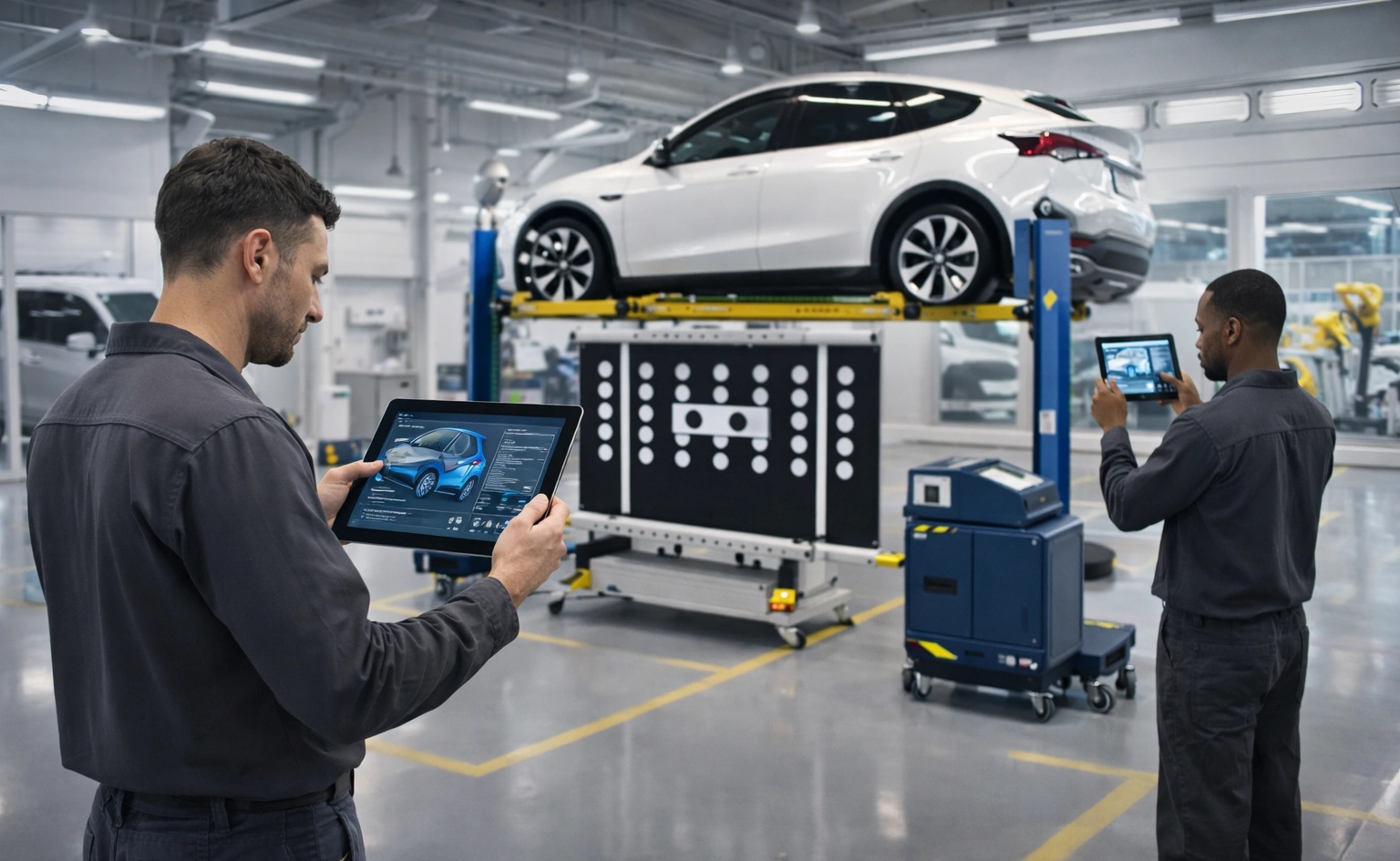
Technicians often need to alternate between structural pulling, lower-body access and general repair tasks. A car repair bench with scissor lift can reduce repeated vehicle transfers, but the benefits depend on lift range, loading method and how the bench fits the wider repair process.
Reduce Unnecessary Vehicle Movement
Moving a damaged vehicle between a lift and a repair bench takes time and introduces additional handling risk.
An integrated lift allows technicians to raise the vehicle for inspection, measuring and access to lower structural areas without unloading it. This can be particularly useful when suspension, underbody and structural work are linked.
The workflow should still be planned carefully. Technicians need to know which operations can be completed safely at each height and when the vehicle must be locked into the bench.
Parts, tools and measuring equipment should remain accessible as the platform moves. Poorly placed cabinets or hoses can remove much of the efficiency gained through lift integration.
Assess Loading and Ground Clearance
Collision-damaged vehicles may have missing wheels, locked suspension or severely reduced ground clearance.
The loading system should accommodate vehicles that cannot be driven normally. Ramps, winches and support equipment need enough capacity and suitable approach angles.
Scissor mechanisms can provide a relatively compact footprint, but the platform and lifting structure may still affect access at the lowest position.
The workshop should test representative vehicles rather than relying only on published dimensions. Long-wheelbase models, low sports cars and larger electric vehicles may create different loading challenges.
Technician visibility during loading is also important. Clear control positions and reliable communication reduce the risk of incorrect alignment.
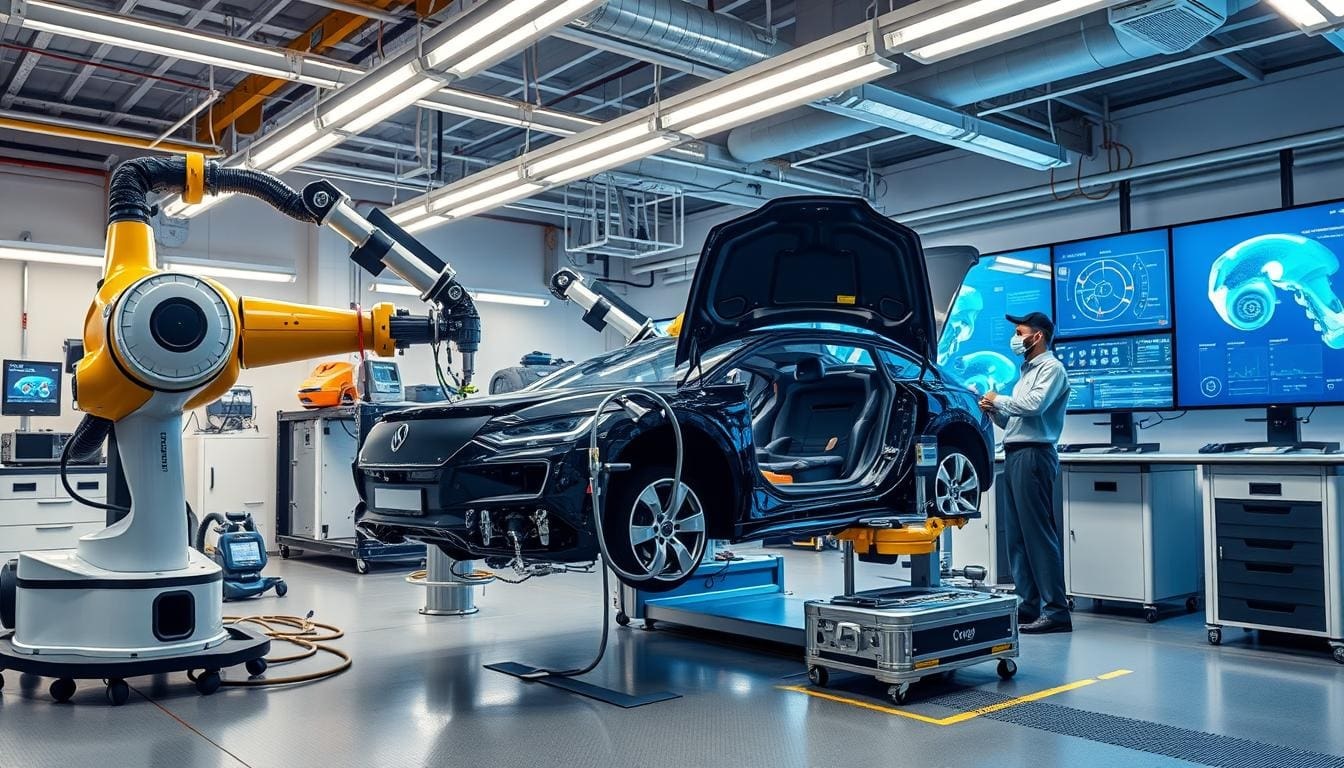
Improve Technician Ergonomics
A fixed-height bench can force technicians to bend, kneel or work overhead for extended periods.
Adjustable height allows the repair area to be positioned more comfortably for measuring, welding, pulling and component removal. This can reduce fatigue and make detailed work easier to inspect.
The lift should move smoothly and stop securely at useful working heights. Mechanical locks or other safety systems must protect technicians if hydraulic pressure is lost.
Controls need to be accessible without placing the operator close to moving parts. The working area should remain clear of tools, hoses and loose components before the bench is raised or lowered.
Ergonomic benefits depend on using the lift intentionally rather than leaving it at one familiar height for every operation.
Maintain the Lift and Bench as One System
Integrated equipment combines structural and lifting functions, so maintenance needs to address both.Hydraulic components, pivots, locks and control systems require scheduled inspection. Uneven lifting or unusual movement should be investigated immediately.
The bench surface, anchoring points and pulling equipment must also remain within tolerance. Maintenance records should document both repair and lifting systems.Technicians need training on load distribution, safe lifting points and the permitted use of the bench at different heights.
An integrated scissor lift can make a structural bay more adaptable, but only when loading, ergonomics and maintenance are treated as one coordinated system. Used correctly, it helps technicians complete more stages of the repair without repeatedly relocating the vehicle.