6
Most roadside kits sold in big-box aisles look impressive right up until the moment your car won’t start on a rainy two-lane highway thirty miles past the last gas station. Inside that neat zippered pouch you usually find a miniature flashlight with dead batteries, four adhesive bandages, a pair of thin cotton gloves, and a flimsy tow strap that makes you nervous just looking at it. Real travel emergencies rarely look like a neatly staged photo. They look like a slow leak on a gravel shoulder at dusk, a dead battery after leaving cabin lights on at a scenic overlook, or an unexpected mountain squall that turns a pleasant drive into an overnight wait.
Packing a genuinely useful emergency kit means thinking about what goes wrong on actual American roads—interstates, desert stretches, rural backroads, and snowy passes—and leaving behind dead weight that takes up precious cargo space. You do not need to outfit your trunk like a rescue truck. You need practical tools, reliable visibility gear, basic first aid, and enough water and warmth to stay calm while help is on the way or you handle a minor fix yourself.
Visibility, Power, and Roadside Safety Gear
When something goes wrong along a roadway, being seen comes first. Distracted drivers move fast on open highways, and a disabled vehicle sitting low near a shoulder or curve is hard to spot in rain, fog, or twilight. Keeping high-visibility gear right at the top of your trunk—not buried under duffel bags—makes a huge difference in how safe you feel stepping out of the car.
Start with a sturdy LED flashlight or headlamp with spare batteries, plus a small rechargeable work light that can stick or stand near your work area. A headlamp is especially underrated when you are trying to read a tire sidewall, locate a jump point, or check fluid levels with both hands. Pair your light source with reflective triangles or LED road flares, which are safer and easier to reuse in dry grass or brush than traditional burning flares.
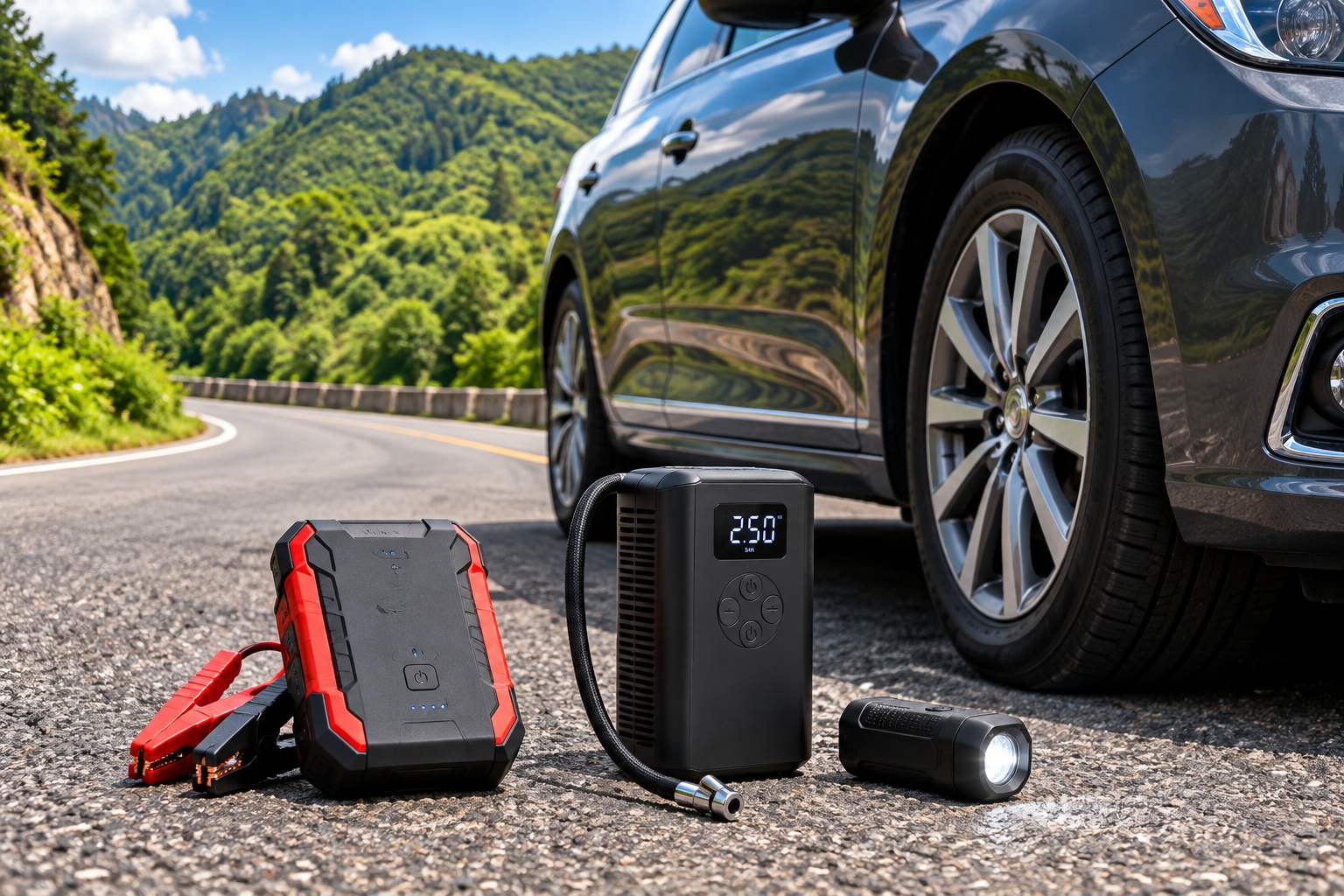
Dead batteries remain one of the most common reasons road trips stall. A lithium jump starter is compact, holds a charge for months when stored properly, and lets you restart a vehicle without waiting for a helpful stranger or flagging down another car. Heavy-duty jumper cables are still fine as a backup, though a lithium pack gives you independence when you are parked awkwardly or traveling alone. Keep a small tire pressure gauge and a portable 12-volt inflator nearby as well, because many roadside headaches start with a slow puncture or a sharp temperature drop that leaves a tire dangerously low.
Basic Tools for Quick Fixes and Tire Changes
You do not need a full mechanic’s chest rattling around every corner, yet having a handful of dependable basics saves plenty of aggravation. A tire iron or lug wrench that actually fits your wheel nuts, along with a solid jack and wheel chocks, matters far more than flashy gadgets. Before any trip, check that your spare tire is inflated and accessible, or know how your vehicle’s mobility kit works if it came without a spare.
A few compact hand tools round out the practical side of a trunk kit:
-
Multitool or pliers: Useful for prying loose trim, gripping stubborn clips, or making quick adjustments when a simple part shifts out of place.
-
Screwdrivers: A reversible flathead and Phillips driver handles hose clamps, battery terminals, or loose interior fasteners.
-
Duct tape and zip ties: Not permanent repairs, yet remarkably effective for holding a loose bumper liner, shielding a damaged wire, or securing gear until you reach a shop.
-
Work gloves: Protect your hands from sharp metal edges, hot engine parts, brake dust, and road grime during a tire swap or fluid check.
Keep these items organized in a sturdy tote or soft toolbox so they do not slide around on sharp turns or spill loose hardware across your cargo floor. A clean shop rag or roll of heavy-duty paper towels tucked into the same bin is worth its weight in gold the moment oil, coolant, or grime gets on your hands.
First Aid, Water, and Staying Comfortable
Roadside delays test patience and physical comfort long before mechanical skill comes into play. Even a two-hour wait for a tow truck can feel draining if you are thirsty, chilly, or dealing with a scraped knuckle or headache. Building personal readiness into your kit ensures you and your passengers stay steady until the situation is resolved.
Pack a well-stocked first aid kit tailored to real travel mishaps rather than scraped knees alone. Include adhesive bandages in multiple sizes, sterile gauze pads, medical tape, antiseptic wipes, antibiotic ointment, blister pads for long walks on uneven shoulders, tweezers, cold packs, and any personal medications or pain relievers your group relies on. Check expiration dates once or twice a year so ointments and medications do not go stale in a warm trunk.
Water and non-perishable snacks belong in every road trip kit, even on short weekend runs. Carry bottled water—ideally rotating it periodically so plastic bottles do not sit through extreme seasonal swings forever—along with calorie-dense items like nuts, trail mix, jerky, or protein bars that hold up well without refrigeration. Toss in a couple of emergency thermal blankets, an extra hoodie or rain shell, and hand warmers if you drive anywhere cold or high-elevation.
Smart Extras Based on Route and Season
A great baseline kit stays in your car year-round, while a few seasonal or route-specific additions adapt it to where you are actually driving. Cross-country desert highways demand extra water and sun protection, whereas northern winter routes call for a snow brush, ice scraper, traction aid like sand or traction mats, and warmer layers. If you are heading deep into rural areas with spotty cell service, a portable power bank with the right charging cables keeps your phone alive for navigation, calls, and weather alerts.
Take ten minutes before your next drive to open your trunk and look honestly at what is in there. If your current setup consists of expired items, empty containers, or gear buried beneath luggage, simplify it into something lean, accessible, and dependable. A well-thought-out kit does not promise trouble-free travel, yet it turns plenty of stressful roadside surprises into minor inconveniences you can handle calmly.